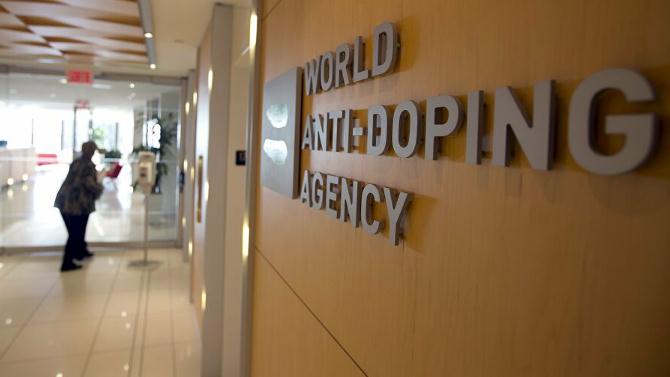
Mejora la versión vigente actualmente y aprobada en noviembre del 2019. Entrará en vigor el próximo 1 de enero del 2021 y en ella aparece el concepto de «métodos específicos» junto al de sustancias ya existente. También incorpora el término de circunstancias agravantes que implican dos años más de sanción y aparece la figura de atleta no profesiona.
La Agencia Mundial Antidopajeacaba de actualizar el Código vigente desde el pasado 1 de enero del presente año y que estará en vigor durante todo este año 2020. Las modificaciones ahora aprobadas empezarán a estar vigentes a partir del 1 de enero del 2021.
Entre las grandes modificaciones que se pueden encontrar en este documento de 14 páginas están por ejemplo la distinción que desde la AMA se va a empezar a hacer entre métodos específicos y no específicos. Este término se suma al ya existente y recogido en su artículo 10 de Sustancia específica. En ambos casos, el empleo de esta sustancia y ahora método, establece una sanción de 4 años de inhabilitación.
Además, aparece el concepto del término de sustancias consideradas de «abuso», dentro de las sustancias prohibidas pero que se consideran de esta forma fuera de todo contexto relacionado con el deporte.
En esta situación, la sanción que se le impondrá al atleta en caso de ser pillado será menos dura, en torno a los tres meses de sanción, siempre que pueda probar que su ingestión ha tenido lugar fuera del período de competición y que además no tiene relación alguna con la intención de mejora de su rendimiento deportivo. La sanción incluso puede quedar en un sólo mes si puede mostrar que está llevando a cabo un tratamiento que obliga a su ingesta.
Además aparece también el concepto de circunstancias agravantes que implica un incremento adicional de la sanción inicial por un período de dos años, siempre dependiendo de la gravedad de la sanción como de las propias circunstancias agravantes. Salvo que el atleta o el sancionado pueda demostrar que desconocía que estaba cometiendo un delito y violando las normas.
Otros de los cambios importantes en la redacción es la inclusión del término «otra persona» además de la ya existente del Atleta. De esta forma la sanción es aplicable tanto para el atleta que consume productos prohibidos como para la persona que se lo suministra.
Por último introduce el concepto de atleta aficionado o NADO, si bien establece como límite que dicho atleta, en los cinco años previos a la infracción, no fuese considerado como atleta internacional, haya representado a su país o haya estado incluido en un Testing Pool.
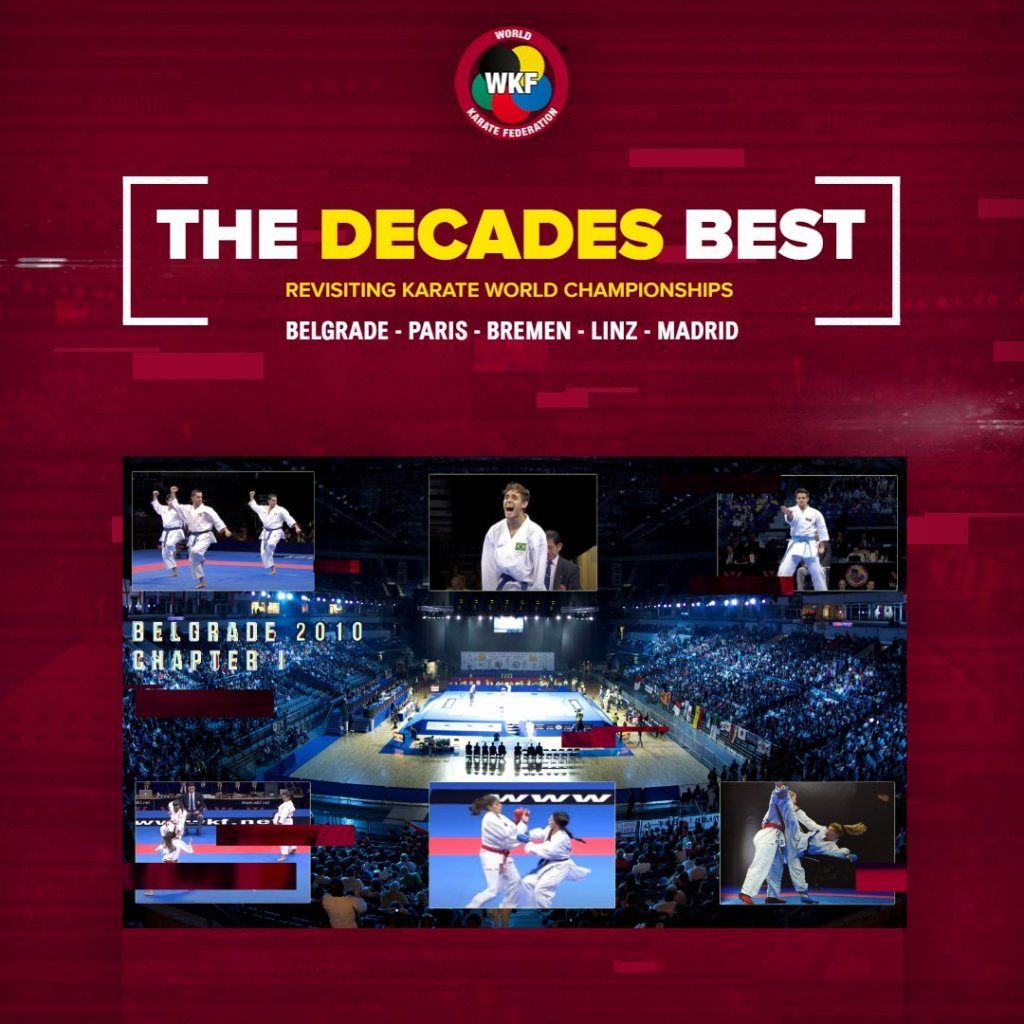
Los mejores momentos del último Campeonato Mundial de Karate están llegando a la WKF. La Kata más llamativa, la kumite más eléctrica, las mejores patadas y golpes … todos los hitos más emocionantes del último Campeonato Mundial están incluidos en «The Decades Best», la nueva serie WKF
Con un aspecto fresco y actualizado y comentado por algunos de los héroes más importantes de nuestro deporte, «The Decades Best» trae a los fanáticos eventos inolvidables de la historia reciente del Karate. Es una oportunidad única que seguramente no se perderá por los verdaderos entusiastas del Karate. Cada dos viernes, se estrenará un nuevo episodio en el canal WKF
EPISODIO I: BELGRADO 2010
El primer episodio de «The Decades Best» trae los momentos más emocionantes del Campeonato Mundial de Karate de Belgrado 2010.
La memorable final del equipo masculino de Kata con lados legendarios de Italia y Japón, la notable pelea por la medalla de oro protagonizada por los héroes Luigi Busa y Rafael Aghayev, la histórica pelea decisiva por el título de Kata masculino que muestra a los iconos de Kata Antonio Díaz y Luca Valdesi, y el bronce recordado El choque de medallas del equipo femenino Kata entre Italia y Serbia se encuentra entre los momentos que se volverán a visitar en este primer episodio.
Comenzando con uno de los mejores combates de kata por equipos de la historia reciente de nuestro deporte, el primer capítulo de «The Decades Best: Belgrade 2010» revivirá la final del equipo masculino de Kata entre Italia y Japón. Con comentarios de Luca Valdesi y el comentarista de TV de WKF Billy Brennan, el video se estrenará el viernes 19 de junio en el canal WKF
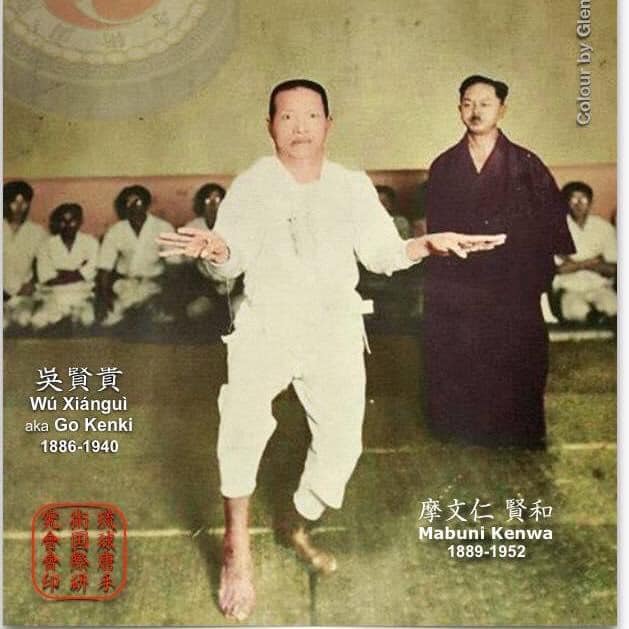
Wu Xian Gui, conocido en Okinawa como Gogenki, nació el 20 de enero de 1886 en Fuzhou, provincia de Fujian, China, donde floreció la práctica de diferentes estilos de Quan-fa, de los cuales se convertiría en maestro en uno de los aspectos, Baihe-quan (puños de la garza blanca).
Se dice que Gogenki aprendió, al igual que sus hermanos, las artes marciales de su tío, «Wu Song Mu», con la intención de proteger el negocio familiar.
Algunos historiadores afirman que Gogenki también aprendió de Zhou Zhihe, que también era profesor en Kanbun Uechi y que enseñó los estilos Baihe-quan y Hu-quan (puños de tigre).
En 1912, debido a la revolución comunista en China, Gogenki se mudó a Okinawa, donde comenzó a trabajar como asistente en una tienda de té. Algún tiempo después, ya en Okinawa, se mudó a Higashi, en Naha, que era una colonia de inmigrantes chinos, donde abrió su propio negocio, también relacionado con el negocio del té. Al mismo tiempo, enseñó artes marciales y no pasó mucho tiempo antes de que fuera conocido en toda la isla, debido a sus habilidades.
En Okinawa, Gogenki también fue conocido como Yoshikawa, que era el apellido de su esposa y fue adoptado por él.
Entre las enseñanzas de Gogenki están Kata Nipaipo, Haffa (Hakucho) y Paipuren (Happoren), que se pueden encontrar en algunos estilos modernos de Karate, como Kingai-ryu, de la familia Matayoshi, To’on-ryu y Shito-ryu. Su conocimiento tuvo una influencia directa en Kenwa Mabuni, Chojun Miyagi, Juhatsu Kyoda y Shinko Matayoshi.
Gogenki murió de cáncer de estómago en mayo de 1940 a la edad de 53 años.
Muchas veces escuchamos los términos «Maestro», «Entrenador», «Profesor» en artes marciales como karate, judo, etc. y no sabemos el porqué de la diferenciación de los términos ni como reconocer a cada uno de ellos. Os explicaremos la diferencia.
Maestro Jean Chalamon,10º Dan de Karate
Si practicas Karate o te gustaría comenzar a entrenar este ate marcial, es conveniente que comprendas qué implica ser un Maestro o Sensei en esta disciplina. Así como lo que representa ser un Profesor y un Entrenador.
¿Con quién has estado tomando clase? ¿O con quién entrenarás Karate? Son practicantes de la misma disciplina con diferentes grados y conocimientos.
CONOCE LAS DIFERENCIAS ENTRE UN MAESTRO, PROFESOR Y ENTRENADOR DE KARATE
Lo ideal sería poder recibir la instrucción directa de un Maestro o Sensei del Karate, sin embargo resulta inaccesible para la cantidad de aspirantes a esta disciplina.
Y aunque hubiera cupo, el Maestro también debería de aceptar tomarlos como sus alumnos o aprendices. Existen diferencias marcadas entre un Maestro, entrenador y Profesor de Karate, pero también algunas similitudes.
¿QUÉ SIGNIFICA SER UN MAESTRO DE KARATE?
Un Maestro es una persona experta y con gran experiencia, los años que lleva estudiando la disciplina y el conocimiento que ha adquirido permiten que se le llame Sensei.
Pero solo los demás se refieren así al Sensei, él nunca lo hará por su cuenta si es un verdadero Maestro, por lo regular dirá que es un Kioshi.
Por su tradición y honor, un Sensei permanece en humildad practicando el arte del “camino de la mano vacía”, su filosofía de vida.
Existen tres grados de Maestría:
Renshi, para referirse a un adjunto o auxiliar de Profesor.
Kioshi, para quien es un Profesor debidamente.
Hanshi, para quien es Maestro de Maestros.
¿QUIÉN ES UN PROFESOR DE KARATE?
Un Profesor de Karate es una persona que conoce bien la disciplina, la ha practicado durante algún tiempo y es capaz de enseñar a alguien más el conocimiento de la técnica.
El Profesor de Karate también es capaz de realizar la mayor parte o en totalidad de lo que enseña, pone ejemplo de cómo realizarlo, pero no es un Maestro de Karate. Se dedica a enseñar los grados para principiantes e intermedios.
¿QUIÉN ES UN ENTRENADOR DE KARATE?
Un entrenador de Karate es una persona que conoce la técnica pero pudo haberla practicado o no hacerlo y aun así ser entrenador.
El entrenador de Karate debería ser una persona con capacidad de liderazgo, carácter de mando y conocimiento para dirigir una rutina de acondicionamiento físico y de técnica para el taekwondoin.
PRINCIPALES DIFERENCIAS ENTRE UN ENTRENADOR, PROFESOR Y MAESTRO DE KARATE
Se puede decir que las diferencias son claras, mientras que un Maestro de Karate representa el máximo conocimiento en técnica y filosofía del “camino de la mano vacía”.
Un Profesor de Karate representa el grado siguiente en cuanto a conocimiento y práctica de la técnica y filosofía de vida del Karate.
Mientras que un entrenador puede ser o no ser experto en Karate, pero mientras aprenda cómo enseñar a alguien más a patear correctamente aunque él no pueda hacerlo, cumplirá con su función.
El entrenador por su parte será casi imposible que pueda transmitir la filosofía de vida del Karate, aunque podría haber excepciones.
La realidad es que muchos entrenadores se olvidan del y de muchas otras artes marciales, marcando una gran diferencia con los Maestros y Profesores de Karate. objetivo de no pelear del Karate.
SIMILITUDES QUE LOS TRES DEBERÍAN DE ENSEÑAR UN ENTRENADOR, MAESTRO Y PROFESOR DE KARATE
Aunque tengan diferentes grados e instrucciones en el Karate, sí es posible que los tres puedan compartir al menos algunas similitudes.
Entrenador, Profesor o Maestro de Karate debería de ser apasionado, disciplinado, constante, dedicado y respetuoso.
Si se es bueno llevando estos valores, no importa a cuál de las tres distinciones pertenezca, seguramente estará enseñando con respeto el arte marcial que imparte.
¿QUÉ RANGO SE DEBE TENER PARA SER UN SENSEI O MAESTRO DE KARATE?
El camino de la mano vacía pide de sus practicantes un caminar coherente y respetuoso con su filosofía, por lo que siempre están mejorando en humildad.
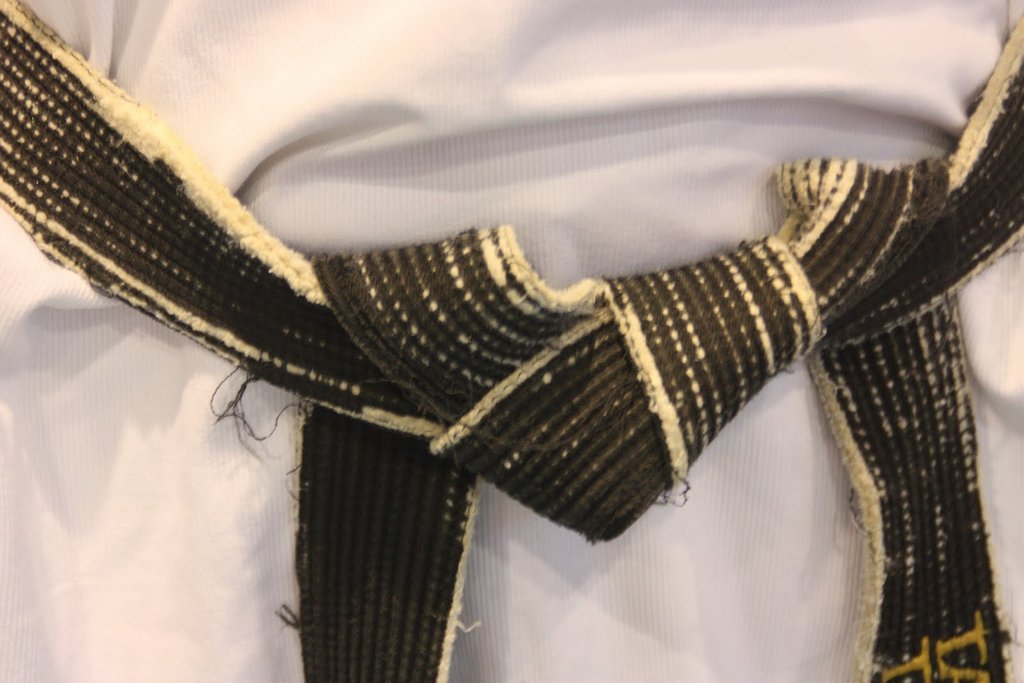
Para que pueda ser llamado Maestro o Sensei se debe de poseer al menos el 5º Dan y el factor edad también suele ser tomado en cuenta.
Varios Sensei dijeron preocuparse poco por el reconocimiento o adquisición de grados mayores, y señalaban que lo verdaderamente importante era el conocimiento adquirido y el uso que se le da.
Además del magnífico manejo de la técnica, un Hanshi conoce perfectamente el conocimiento del cuerpo, la experiencia adquirida y cómo se enseña la filosofía del Karate para darle un sentido a la técnica y que no solo sea una forma de defensa personal.
¿CUÁL ES EL GRADO MÁXIMO QUE PUEDE ALCANZAR UN SENSEI O MAESTRO DE KARATE?
El máximo grado que un Maestro de Karate pude alcanzar en vida es el de 9no. Dan, siendo el último grado posible de alcanzar.
Para los verdaderos Hanshi del Karate, la euforia y pretensión de ostentar un nuevo grado no existe, han comprendido que el objetivo real del Karate es la humildad, el “camino de la mano vacía”.
Sin embargo, el respeto y honor son fundamentales en la práctica del Karate, por lo que al fallecer un Maestro 9º. Dan, se le otorga el 10º. grado Dan.
La última muestra de respeto y honor para quien con su ejemplo enseñó y guió a cientos de alumnos y aprendices. Un Maestro nunca deja de aprender ni tampoco de enseñar.
LO QUE NO ES SER UN SENSEI O MAESTRO DE KARATE
Es fácil reconocer a un farsante, porque se hacen llamar así mismos como Maestros o Senseis, al tiempo que no demuestran su conocimiento ni experiencia en la técnica y mucho menos en la filosofía del Karate.
Existen los que sí tienen el grado y el conocimiento, pero no practican la filosofía de vida del “camino del a mano vacía” y tampoco se la enseñan a sus estudiantes.
Teniendo como resultado vanidad en los Dogos, egolatría, pretensión y mala actitud en combates y entrenamiento en general.
¿Te han quedado claras las diferencias entre un entrenador, Maestro y Profesor de Karate? ¡Compártelo si te ha parecido útil!
Los mejores karatekas del mundo se están adaptando a estos tiempos inciertos. Presentamos «Karate en los tiempos del coronavirus», un espacio para compartir las ideas más originales, notables y sobresalientes de karartekas de primera clase para sacar lo mejor de la «nueva normalidad». Los fanáticos del Karate con una historia única de Karate en tiempos de coronavirus ahora pueden enviar sus historias a worldkaratefederation2016@gmail.com para que aparezcan en las próximas ediciones de «Karate en tiempos de coronavirus»
MAY
MAY 31 – ANTONIO DIAZ
Antonio Diaz of Venezuela is not just one of the most beloved Karate Stars in the world. He is a two-time World champion and member of WKF’s Athletes’ Commission who is also well-known for his selfless acts to make the world a better place. As his birthday approaches, the Karate hero is calling all his fans to donate any amount of money to an organisation or foundation in exchange for an online session with the Kata master. This is a perfect example of Karate Values at their best and a case of Antonio Diaz’s kindness.
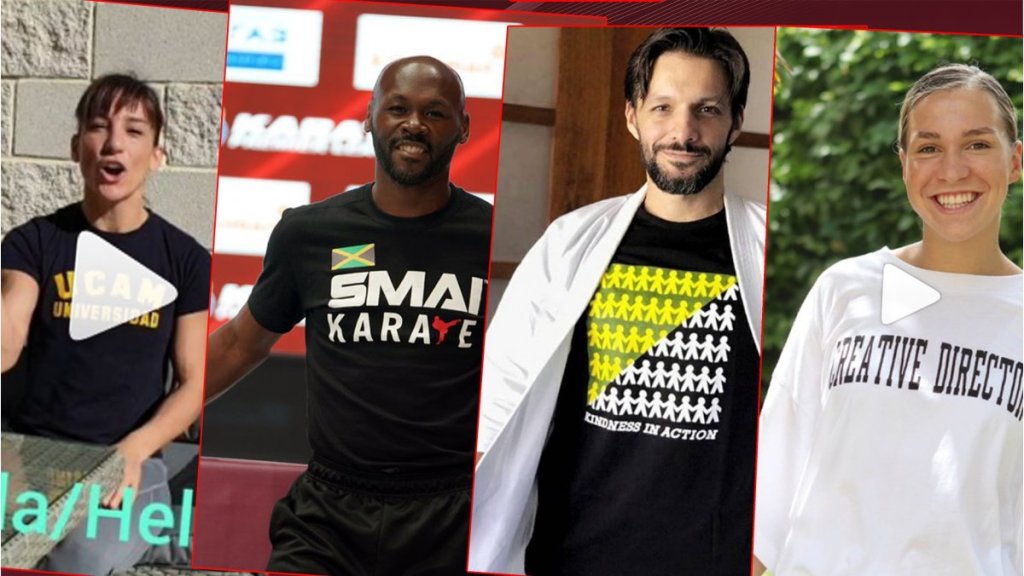
“Don’t Let Your Guard Down”. This is the message that the Pan American Karate Federation (PKF) is giving us in a fantastic video showcasing some of the best karatekas in the continent. Stars such as Maria Dimitrova, Antonio Diaz, Sakura Kokumai and Douglas Brose are among the heroes of the sport participating in this campaign. OSS!!
The WKF Entourage Commission met Thursday via videoconference to discuss different updates in the application of Safe Karate policies and to analyse ways to continue WKF’s progress in guaranteeing the well-being of Karate athletes.
With the 2021 European Championships to be held in Sweden passing the -365-day count, Swedish athletes are thrilled about hosting the event at home. “We haven’t had a championship (like this) in 40 years, so we are very excited. I am looking forward to competing in my home ground,” said Sweden’s Hana Antunovic.
WKF President Antonio Espinós met with representatives of national federations via videoconference to discuss the development and promotion of Karate around the world and to analyse the impact of the coronavirus crisis.
Gwendoline Philippe of France endured one of the most heart-wrenching moments of the season of Karate 1-Premier League when she suffered a devastating knee injury. Now, after weeks of hard work and efforts, the promising karateka who is the current U21 World champion is starting to see the light at the end of the tunnel.
The WKF Referee Commission held a meeting via videoconference to analyse the situation of Karate’s referee body amid the current crisis caused by the coronavirus pandemic.
The International World Games Association (IWGA) is celebrating its 40th anniversary. Founded on May 21st, 1980, the IWGA held the first edition of The World Games a year later in Santa Clara, USA. The World Karate Federation is a founding member of the IWGA, and WKF President Antonio Espinós acts as one of the members of the IWGA Executive Committee.
After the postponement of the Olympic Games Tokyo 2020 and in agreement with the International Olympic Committee, the World Karate Federation has revised the Qualification System for the Karate competition at the Olympic Games.
Emiri Iwamoto of Japan is one of the best competitors in the category of Female Kata. The athlete who takes the eighth position in WKF World ranking is making a name for herself in Okinawa, the birthplace of Karate. The winner of the 2017 AKF continental championships was featured in the main newspaper of the island, the Okinawa Times.
The Executive Committee of the European Karate Federation met via videoconference to discuss the future of the sport in the continent and the effects of the coronavirus crisis on European Karate.
The Executive Committee of the World Karate Federation met via a videoconference to discuss the prospects of the sport amid the current climate of uncertainty caused by the global pandemic of the coronavirus outbreak.
Antonio Diaz of Venezuela is featured on the official website of the International Olympic Committee as the two-time World champion balances keeping fit and form in times of lock-down while raising his new-born child.
Alton Brown of Jamaica is putting his Karate skills to the service of those who need them the most: disadvantaged girls in India. First-class karateka Alton Brown of Jamaica is taking #KarateValues to a whole new level as he commits to becoming an ambassador for a project to teach girls from challenging backgrounds in India the benefits of Karate.
Sakura Kokumai of the USA is making the best of these uncertain times; in cooperation with one of her sponsors, the current Pan American Games champion is teaching all her secrets on online sessions on Instagram.
Stanislav Horuna of Ukraine is demonstrating his status as one of the most popular Karate athletes in the world since the winner of the 2019 European Games is invited to be part of «Fight Back», a high-profile event featuring the world’s biggest Martial Artists to raise funds for American Red Cross relief efforts.
“Glad to be a part of this great initiative,” said the first-class karateka.
Many first-class karatekas are taking new technologies to a new level in times of COVID-19. Brazil’s Douglas Brose is using new technologies to keep fans engaged as he is leading a successful series of online seminars.
We all know who the real heroes of this crisis are. France’s Alexandra Recchia took the time to thank those who have worked so hard during these past months to fight the global pandemic. “You are the true samurais,” reads the sign she is holding in her post.
“THANK YOU, health workers, for your strength, your selflessness, your courage, your tenacity, your resilience despite the limited resources available, despite the appalling working conditions and despite the absence of adequate salaries. You are exceptional and essential,” the two-time World champion writes in her post.
The popularity of Karate all over the world is being showcased extensively in these uncertain times. In Finland, first-class karateka and current European Championships bronze medallist Titta Keinanen is taking the status of Karate to another level since she is the star of the new and breath-taking advertising campaign of one of the main sponsors of the Finnish Olympic Committee.
These difficult times are the perfect moment to show the many values of our sport. Karate’s first-class athletes are very much aware of the strength of Karate values and the tremendous impact that the crisis is having on the weaker groups of population; some of them continue making their best to help those in need. Sajad Ganzjadeh of Iran is part of the humanitarian project “Empathy Nights” aiming to bring food to those who need it the most.
Hard work pays off, and more often than not, recognition comes for those who have put their heart and soul in making their best version of themselves. Peru’s Alexandra Grande received an outstanding recognition this month as she was included among the top 10 best Peruvian athletes of all times. ¡Enhorabuena Alexandra!
Some of our top athletes are making the best of these uncertain times and they are using all the resources at hand to become better versions of themselves. Sandra Sanchez of Spain does not just perform extenuating workout routines, as she is showing on her social media channels. She is also taking the time to learn sign language. Very impressive!
As stated in previous posts, Karate Stars are contributing to increase the popularity of our sport with their presence on TV, interviews on newspapers, participation in spots etc… Damian Quintero of Spain is taking these appearances to another level. The current World Championships runner-up is being featured on Spanish national TV in a kids show where the leader of WKF World ranking teaches karate for youngsters.
As most of the world is still in confinement, some of our athletes are focusing on making life a little better for those who have more problems to go through the difficulties of lockdown. Kiyou Shimizu of Japan is taking her social media channels to teach kids how to train Karate at home.
Since Karate events are being postponed or cancelled due to the coronavirus pandemic, karatekas are using their social media channels to exchange experiences and keep in touch with colleagues. Grand Winner Anzhelika Terliuga of Ukraine hosted a live chat session on her Instagram page together with five-time World champion and Karate legend Rafael Aghayev. Karate fans had the opportunity to see the two heroes of the sport talking about their ways to cope with the current situation.
As the only French karateka who is thus far qualified to take part in the Olympic Games, Steven Dacosta is enjoying well-deserved attention at home. His popularity is reaching such heights that he was featured in France’s national TV contest show “Questions pour un champion”.
Many of our top athletes have taken the opportunity of the confinement and the possibilities of new technologies to help Karate fans to make the most of these difficult times. Some of them, like Ukraine’s Stanislav Horuna are using social media to share their knowledge and experience. The fan favourite karateka from Ukraine is doing online seminars to engage with enthusiasts of the sport.
While the Karate world continues getting ready to make its Olympic debut in the Olympic Games Tokyo 2020, and with the event in Tokyo starting in nearly 450 days, the Karate family maximises the opportunities around the Olympic status of the sport. No less than nine countries joined the Olympic Solidarity programmes in 2019 and nine athletes received the Tokyo 2020 Scholarship last year.
Athletes and heroes of the sport such as our top karatekas have the responsibility to use their influence for the common good. Bettina Plank of Austria is helping the Austrian government to raise awareness around the necessity to wear masks. The current European Championships runner-up joins the campaign #wirtragenmaske to spread the use of masks.
We all know that every karateka in the world keeps a code of conduct following the values of our sport. Our top athletes are the leading force behind these values, and they do their utmost to help those in need. Spain’s Sandra Sanchez is joining a campaign to raise funds for the benefit of the Red Cross and the fight against coronavirus. The current World champion auctioned off the gold medal which she won in the 2005 Karate 1-Premier League in Egypt. She collected no less than €4800.
APRIL 18 – HAMIDEH ABBASALI AND BAHMAN ASGARI GHONCHEH
In these difficult times, it is crucial to keep the spirits up. Iran’s Hamideh Abbasali and Bahman Asgari Ghoncheh are doing their best to help spread positive messages and are joining and initiative of the Peace Commission of the National Olympic Committee of Iran to share hope in these troubled moments.
Being in lockdown is not easy. However, confinement does have its perks. You have more free time to try all those things you normally put behind due to other responsibilities. Sara Cardin of Italy shows us what she is doing with her free time: learning to play guitar. It sounds great to us!
Karatekas from all over the world have demonstrated their commitment and solidarity as they have massively participated in the #WhiteCard and #ReiForApril6 campaigns. Both initiatives were created to honour the power of sport on the occasion of the International Day of Sport for Development and Peace which was celebrated on April 6.
How popular are our Karate stars? Some of them have earned well-deserved recognition due to their hard work and their success. Serap Ozcelik Arapoglu of Turkey has acquired such status after nearly 12 years of continuous achievements that she is a recognised figure in her country. The karateka who is the current leader of WKF World ranking in Female Kumite -50kg and defending Grand Winner is being featured on the cover of the Turkish edition of the magazine “Elle”.
Play True Day is celebrated on April 9th, a WADA initiative that has been celebrating Clean Sport and raising awareness of its importance among athletes and beyond, for the last six years. Once again, the WKF, in collaboration with WADA, joins the global anti-doping community on this day to recognise the importance of protecting Clean Sport.
As we could attest in the WKF’s series “Karatekas #StayActive”, our athletes are doing their best to keep fit in these difficult times. Top karatekas’ work out routines have caught the eye of several organisations and our athletes have been featured as examples of the best training routines. Italy’s Mattia Busato stars in one of the episodes of The World Games’ #Stayathome campaign.
One of the top competitors who is always ready to do his utmost to help others is Damian Quintero of Spain. During this time of confinement, the World Championships runner-up has not only donated masks and sanitary equipment to health centres in his hometown of Malaga. He has also joined Spanish superstars such as Pau Gasol and Rafael Nadal in a charity auction to raise funds to fight the coronavirus pandemic. Damian Quintero donated the karategi and belts he used in the last edition of the European Games in Minsk, where he won the gold medal.
Karate has been included in the sports programme of the first Junior Pan American Games to be held in Cali (Colombia) in 2021. The Executive Committee of PanAm Sports announced during its meeting in San Jose (Costa Rica) the composition of the programme of the first Junior Pan American Games. Karate, in its modality of Kumite, is one of the 30 disciplines included in the list of sports of the inaugural edition of the event.
As the current World champion in Male Kumite +84kg, Jonathan Horne of Germany is a reference in Karate. His increasing popularity, especially in Germany is notable and as an example, the third-ranked athlete in WKF World ranking is being featured in the latest issue of the magazine “Sporthilfe”
EKF Executive Committee member Sergii Levchuk has been appointed chief of Ukraine’s State Agency of Sports. Mr. Levchuk acted as President of the Ukrainian Karate Federation before being nominated as the head of the State Agency of Sports. Leader of the National Karate Federation for the past ten years, Mr. Levchuk had taken the Ukrainian Karate Federation to a bright period of accomplishments inside and outside the tatami. He is a member of the Executive Committee of the European Karate Federation since 2018.
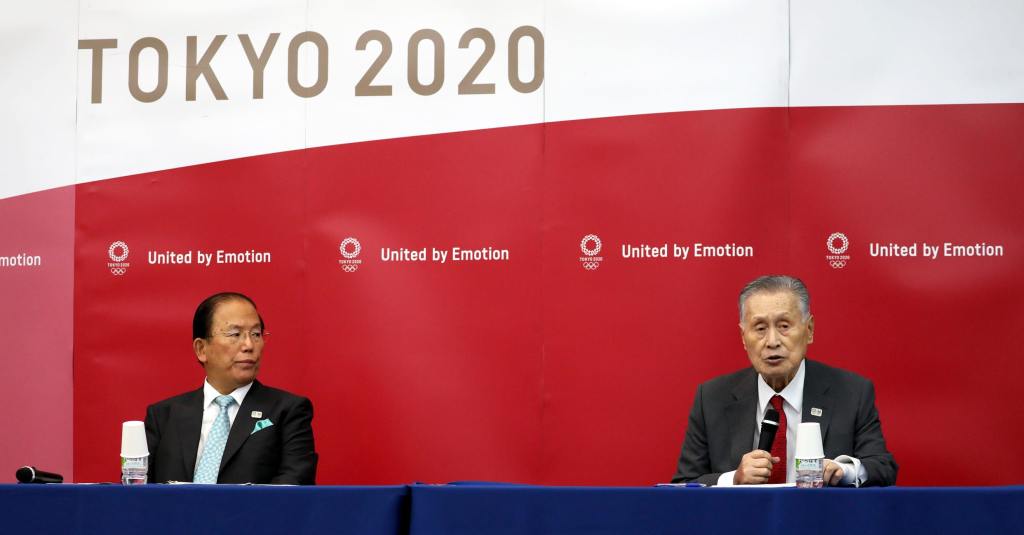
MORI Yoshiro, presidente del Comité Organizador de Tokio 2020, y MUTO Toshiro, CEO de Tokio 2020, en la rueda de prensa, en Tokio, el 10 de junio de 2020.
Hoy (10 de junio) el Comité Organizador de los Juegos Olímpicos y Paralímpicos de Tokio (Tokio 2020) ha presentado un informe del progreso de las preparaciones de los Juegos a la Comisión Ejecutiva del Comité Olímpico Internacional (COI). Después de las decisión del 24 de marzo de posponer los Juegos, Tokio 2020 y el COI realizaron una Revisión del Proyecto Ejecutivo el 16 de abril, en la que ambas partes acordaron un marco para la preparación de los Juegos. Desde este acuerdo, han tenido lugar numerosas conversaciones, y ahora nos complace compartir la siguiente información sobre el posicionamiento, los principios para el replanteamiento y el mapa de ruta para los Juegos.









Debe estar conectado para enviar un comentario.